
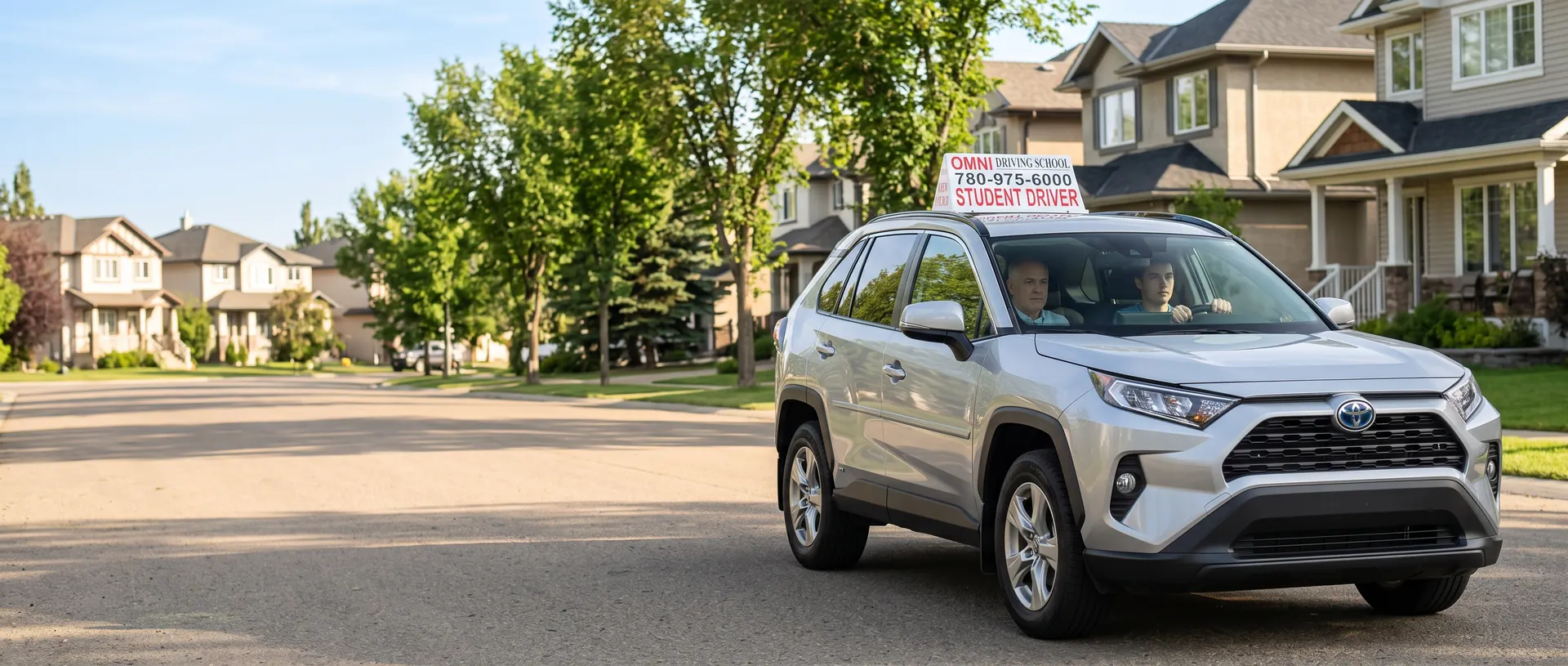
Nervous Driver Tips: How to Feel Calmer Behind the Wheel
Feeling tense in the driver's seat is common. These steps help you take the fear down a notch, one drive at a time.
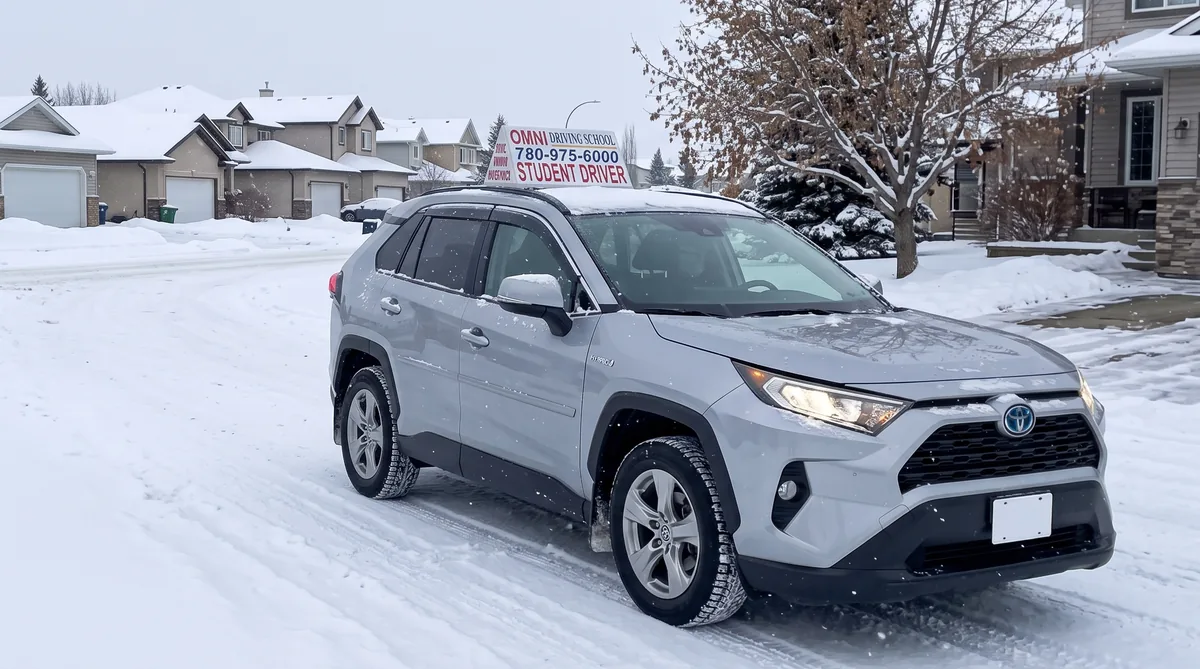
Why nerves show up
These nervous driver tips start with a simple truth. Feeling anxious behind the wheel is common, and it usually eases with practice.
Most driving nerves come from not knowing what will happen next. Will that car pull out? Will I miss my turn? The more of the drive you can predict, the calmer you feel.
Alberta's Driver's Guide notes that stress can hurt your driving. So learning to stay calm is a safety skill, not only a comfort. If your fear feels overwhelming, talking to a health professional is a sensible step too.
Get ready before you drive
A calm drive often starts before the engine does.
- Plan your route. Know your turns and which lane you need. The Driver's Guide advises getting into the right lane well before a turn or exit.
- Pick a quiet time. Residential streets on a weekend morning are a gentle place to start.
- Arrive rested. Tiredness and stress make everything feel harder. Eat something first, too.
- Set up the car. Adjust your seat, mirrors and temperature while you are parked.
- Cut the noise. Silence your phone and keep music low or off.
- Choose a calm supervisor. If you are a learner, practise with someone who speaks quietly and plans ahead.
Build up in small steps
Fear shrinks when each drive is only a little harder than the last. Try a simple ladder.
- Quiet residential streets, with few turns.
- The same streets at a busier time of day.
- Main roads with traffic lights and lane changes.
- Traffic circles and busier intersections.
- Highway driving, with merging and exits.
Stay on each step until it feels routine, even a little dull. Short drives of 20 to 30 minutes are fine. Driving the same route several times is not wasted time. It is how the route stops being scary.
After each drive, jot down one thing that went well and one thing to work on. Over a few weeks, you will see real progress.
Calm yourself while you drive
- Breathe out slowly. At a red light, take a long breath out and drop your shoulders.
- Loosen your grip. Hold the wheel firmly, not tightly.
- Look far ahead. The Driver's Guide suggests 12 to 15 seconds ahead in the city. Seeing more means fewer surprises.
- Keep your space. Stay at least two seconds behind the car ahead. More space gives you more time to think.
- Keep right on multi-lane highways. Slower traffic should use the right lane, which leaves the left lane for passing.
- Let tailgaters go. If someone is close behind, ease off a little so they can pass.
- Let a missed turn go. Carry on to the next one. Never reverse on a road to get back.
- Take a break. If you feel shaky, pull over in a safe, legal place and rest for a few minutes.
Handling the moments that scare you
Honks and impatient drivers
A honk is rarely personal. Stay in your lane, keep your speed steady and let them go. Their hurry is not your problem.
Left turns at busy intersections
Wait for a gap you are sure of. The Driver's Guide is clear that a driver turning left across oncoming traffic cannot turn until it is safe. Nobody behind you can make that choice for you.
Lane changes and merging
Check your mirrors, do a shoulder check and signal before you move. On a highway, merging is a shared job. Neither you nor the drivers already on the road have the right-of-way, so match their speed and pick your gap early.
Traffic circles
Circles feel busy, but the pattern is always the same. Our guide to traffic circle rules walks through each lane and exit.
For parents in the passenger seat
A nervous learner picks up on a nervous supervisor. A few nervous driver tips for parents keep the car calm.
- Give directions early. Say "turn left at the next light" well before the light, not at it.
- Keep your voice level. Save a sharp tone for real danger.
- Talk about mistakes after you park. In traffic, the learner needs all their attention for the road.
- End on a good note. Finish each drive with something they do well, like a quiet loop near home.
- Keep sessions short. Two calm 20-minute drives beat one tense hour.
When a lesson helps
Some nerves fade faster with a certified instructor beside you. Our instructors have 6+ years of teaching experience and are patient with beginners and nervous drivers. Lessons are one-on-one in our car, with feedback during each lesson. A 5-minute break is allowed, and lessons can be given in Punjabi and Hindi.
If you already have a licence but have lost your confidence, a Brush-Up gives you two focused hours to rebuild it. Prefer to book one hour at a time? Our hourly lessons are available in all five areas we serve. These nervous driver tips work well alongside a lesson, because you get to practise each step with support.
Take the next step calmly
Start at your own pace, with free pickup and drop-off from your address in all five areas we serve. Call or WhatsApp any day from 7:00 am to 9:00 pm to talk it through first.